The Vendor Edit: Missouri Gown Preservation & Still Her Dress
Hailey Rogers
Instagram: @missourigownpreservation @stillherdress
Website: https://www.missourigownpreservation.com
Favorite Wedding Day Tradition: First looks, gahh they’re just the sweetest moments!
Go-To Wedding Caffeine: Venti Brown Sugar Shaken Espresso with an extra pump of syrup and vanilla protein cold foam (I splurge on wedding days… it's a business expense, right?)
How It Started
Can you tell us how you got started in gown preservation and heirloom dress transformations?
Sewing has been part of my life since I was five years old, and over time, I fell in love with gown construction and began designing custom wedding dresses. After becoming a mom, that passion shifted into creating heirloom Christening gowns from wedding dress materials, including cutting up my own gown, which naturally led to transforming full legacy dresses.
My mom, Debbie of Alterations by Debbie, is a prominent bridal alterations specialist in the area, and more and more of her brides wanted to incorporate their mothers’ gowns into modern weddings. That’s when my focus really honed in on legacy pieces.
However, as we began opening hundreds of preserved gowns for these redesigns, we noticed a heartbreaking pattern: yellowed sequins, mystery stains, and discoloration that hadn’t been there originally. After digging deeper, we discovered that traditional cardboard-based preservation materials themselves were the main culprits of the gown’s poor condition decades later.
Wanting to offer today’s brides a better option, that discovery led to launching Missouri Gown Preservation, where we use a completely cardboard-free, museum-quality method designed to thoroughly clean and truly protect gowns for decades.
What originally drew you to working with wedding gowns specifically?
Working with wedding gowns wasn’t something I deliberately pursued. It unfolded naturally as my own life entered the falling-in-love and getting-married season, and I began noticing not just the materials and construction, but the moments surrounding the dress.
There’s something powerful about watching a bride find her gown and then seeing what happens during alterations, when a dress stops being “a dress” and starts feeling like hers, and it becomes one of the most sentimental pieces from the entire wedding day.
The real shift came when brides began bringing in their mother’s gowns to redesign. Watching the emotion during that unboxing moment and seeing daughters try them on deepened my passion for helping brides still wear their mother’s dress, just in a way that feels uniquely their own. That full-circle experience is what eventually led me into preservation, because protecting the gown properly means protecting the story it carries.
How would you describe your approach or philosophy when it comes to preserving and reimagining such sentimental pieces?
At the heart of Still Her Dress and Missouri Gown Preservation, our philosophy is simple: honoring stories. Every gown carries one. Whether we’re transforming a mother’s dress so her daughter can still wear it in a way that feels uniquely her own, or preserving a bride’s modern gown so one day her daughter can do the same, our approach remains the same. We treat each dress as if it were our own, with great care and deep respect for what it represents. That means being conservative with our cuts, thoughtful with every detail, and meticulous with our cleaning and preservation, because ultimately we’re protecting the story woven into the dress.
The Importance of Gown Preservation
(I often say I am annoyingly passionate about something no one knows to care about, and that is the nitty gritty science of gown preservation!)
Why is gown preservation something every bride should consider after their wedding day?
Even if a bride doesn’t know what her dress might be used for someday, preservation protects her options.
I always say that every mom who didn’t save her gown ends up regretting it, and every mom who did is so grateful she had. You may not know today what the next chapter of your gown will be, whether it’s a daughter trying it on one day, incorporating it into something new, selling it, or simply revisiting it on an anniversary, but when that moment comes, you’ll be so glad you cared for it properly from the start.
Preservation isn’t about sealing a dress away forever. It’s about making sure it stays beautiful, stable, and ready for whatever its next story might be.
What are some common misconceptions couples have about preserving a wedding dress?
The biggest misconception is that all preservation is the same, or that there aren’t different, better methods available. The materials used, the environment the gown is stored in, and how thoroughly it’s cleaned all make a real difference in how it ages over time.
Another common belief is that if a gown (and veil) looks clean, it doesn’t need professional cleaning or preservation. In reality, many of the most damaging residues, like champagne, sugar, sweat, and body oils, are invisible at first and slowly oxidize as the years pass.
(Story time: I have a Still Her Dress bride who sent us her mom’s 1996 silk wedding dress to turn it into a cute dress to wear to her Italian wedding welcome party. It had never been cleaned and was stored in a garment bag at the back of mom’s closet for 30 years. “It didn’t look dirty after the wedding, so I thought nothing of it, then life got busy and it’s just been in that bag since” When they pulled it out in 2025, there were HUGE dark ambered stains across the front skirt, likely from champagne. Our 4th-generation dry cleaner threw every trick in the book at it and we could only lighten the stain, not remove it. We had to pivot our plan drastically to work around the staining.)
And finally, many assume a garment bag, storage tote, or cedar chest is enough. Unfortunately, fluctuating temperatures, trapped moisture, and non-archival materials can quietly cause damage over time. Proper preservation creates a stable environment designed specifically for long-term textile care.
How soon after the wedding should a gown ideally be preserved, and why does timing matter?
Ideally within a few days to 3 months after the wedding!
Think about everything your dress comes in contact with on your wedding day, sweat, deodorant, perfume, makeup, lotion, self-tanner, champagne, cake, body oils, hands constantly smoothing the skirt, and of course, all the dust and dirt from dragging a train around. Those contaminants create both visible and invisible stains that begin bonding to the fibers fairly quickly. The longer they sit, the deeper they settle in and the harder they are to fully remove. Acting early gives us the best chance to thoroughly clean and stabilize the gown before time quietly works against it. That said, if it’s been years, it’s never too late to prevent further damage. Older stains may require more restoration work, but proper cleaning and preservation can still halt the aging process and protect the gown moving forward.
What types of damage or aging can happen if a gown isn’t properly preserved?
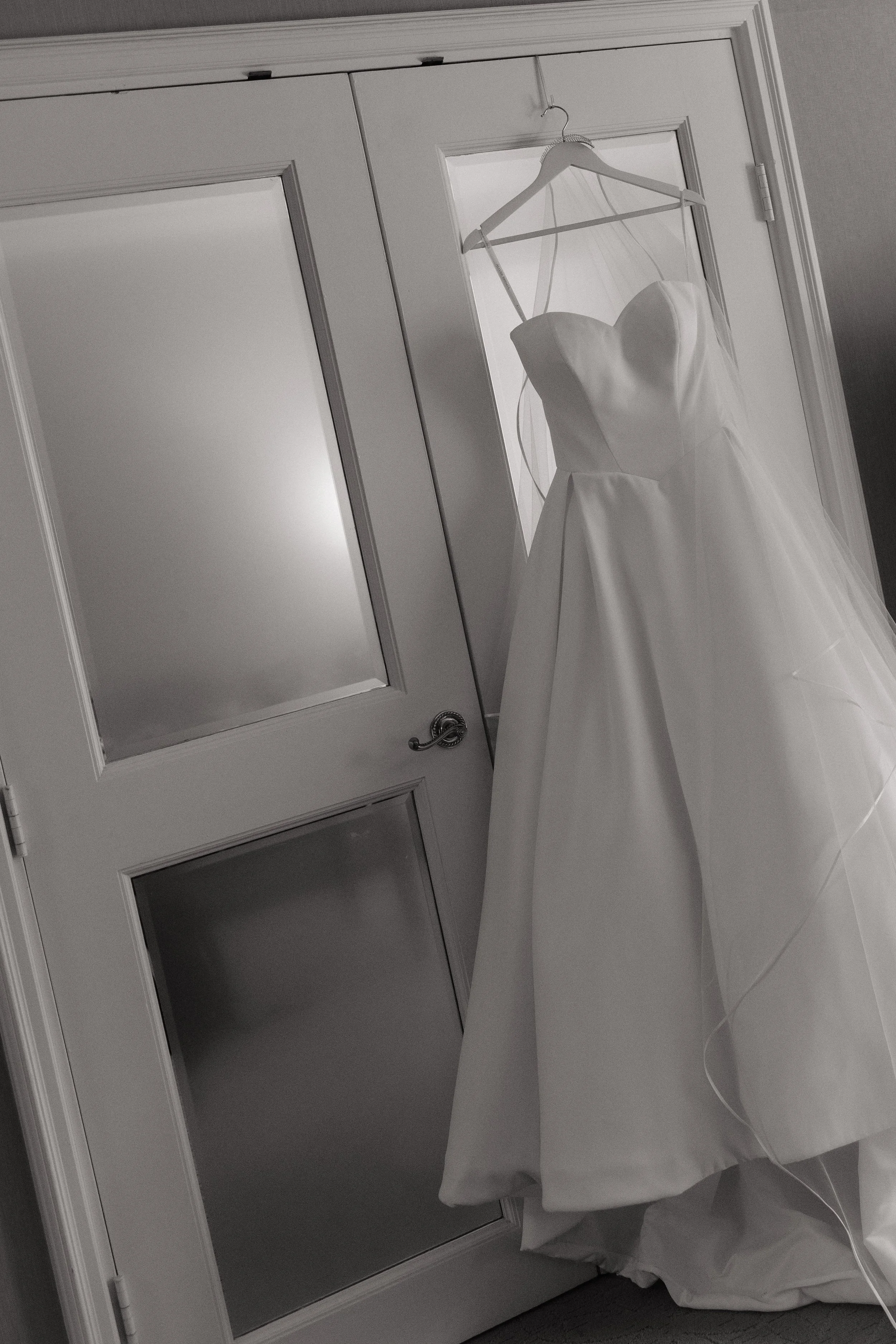
Preservation really comes down to three things: thorough cleaning, proper storage materials, and the right environment. If a gown isn’t fully cleaned, invisible residues like sugar, sweat, and body oils can oxidize over time, leading to dark amber stains that may not be reversible. If it’s stored in materials that aren’t truly archival, acidic environments, adhesives, and moisture can slowly weaken fibers, yellow sequins, and make lace brittle. And when gowns are kept in fluctuating temperatures, like attics, basements, or garages, heat and humidity quietly accelerate that breakdown. We’ve seen this firsthand in gowns preserved decades ago in traditional sealed cardboard boxes with plastic viewing windows. Cardboard naturally breaks down and re-acidifies over time, and plastic viewing windows and their adhesives off-gas directly onto the bodice, especially affecting delicate embellishments like lace and sequins. The damage doesn’t happen overnight, it happens gradually. (and I have a whole collection of pictures to prove it!) That’s why we use museum-quality, cardboard-free materials, including a fluted polypropylene preservation chest, acid-free unbuffered tissue, and breathable muslin liner and outer sleeve. Our preservation method is unsealed and designed to maintain a stable, truly archival environment so the gown is protected for generations.
Heirloom & Generational Dress Transformations
What does it mean to you to work with generational wedding dresses that carry so much family history?
It’s truly an incredible honor. At the end of every project, I thank both the bride and her mom for trusting me with such a special dress and allowing me to be the one to recreate it. I fully recognize that they’re placing one of their most sentimental possessions in my hands, something filled with memories, family stories, and decades of meaning. There’s something really special about watching a bride reconnect with a piece of her family’s history and then finding a way to make it her own.
Can you walk us through the process of transforming a mother’s or grandmother’s gown into something new for a modern bride?
It always starts with a consultation, either virtually or in our Eureka studio. We talk through the gown’s origin story, what year it was worn, how it’s been cared for, and any special memories attached to it. Then we shift to the bride. What does she love? What doesn’t quite feel like her? Which details carry the most meaning? I evaluate the structure and condition of the gown so we understand what’s realistically possible, and from there we create a thorough plan. Sometimes that means altering the original gown so it can be worn again as a rehearsal dinner or reception dress. Other times, we create entirely new pieces from the fabric, like a getting-ready robe, bouquet wrap, clutch, or other meaningful keepsakes. Nothing is cut until the plan is finalized and everyone feels confident moving forward. We also think ahead to future possibilities, like saving enough material for a Christening gown one day, and I plan my cuts accordingly.
Once everything is mapped out, the magic begins. If the gown shows signs of aging, we start with a restoration clean so we’re working from a fresh foundation. Then comes careful deconstruction, especially unpicking lace (fun fact: I often do this with a scalpel!). From there, we reconstruct with heirloom quality in mind, creating pieces meant to bless generations to come.
What parts of an heirloom gown do you see brides most often wanting to preserve (lace, sleeves, buttons, train, etc.)?
Lace and buttons are almost always at the top of the list. Those details tend to feel the most timeless and the most sentimental, so they’re often the anchors we build around. When we’re creating robes, we love using the elaborate tip of the train for the back, and carrying the original hem lace forward. It’s always a mom and bride favorite because it instantly feels like mom’s dress, just reimagined. Lately, I’m also seeing more brides embrace the big 80s and 90s bows and basque waists, and I am totally here for it. When we’re altering gowns for rehearsal or reception looks, it can range from keeping the dress very close to its original form with just adjusting the fit, to removing the poofy sleeves and high necklines. Brides usually go into these projects knowing it won’t be a secret that the gown is vintage, and that’s part of the charm. Each one has a unique balance of what they preserve and what they change.
Have you noticed any trends in how brides are reworking vintage or generational gowns today?
We’re seeing more and more brides choose to wear their mom’s dress as one of their marquee bridal looks, often for the rehearsal dinner and sometimes as their second look for the reception. Brides aren’t trying to recreate the past exactly as it was, they’re blending eras. It allows them to have their own main “yes to the dress” moment while still honoring mom in a really special way. We’re also seeing more small clutches and purses made from the original gown for a subtle vintage nod. I especially love when we create one for mom too, so she has a piece of her dress back in her hands. There’s a growing desire for meaning over perfection. Brides aren’t trying to disguise the fact that it’s vintage, they’re embracing it, even the yellowed sequins or a set-in drink stain that tells the story of a really fun wedding night.
Special Moments
What is one of the most emotional or meaningful transformations you’ve worked on?
There are so many! But one that has really stayed with me was a robe we created a few years ago.
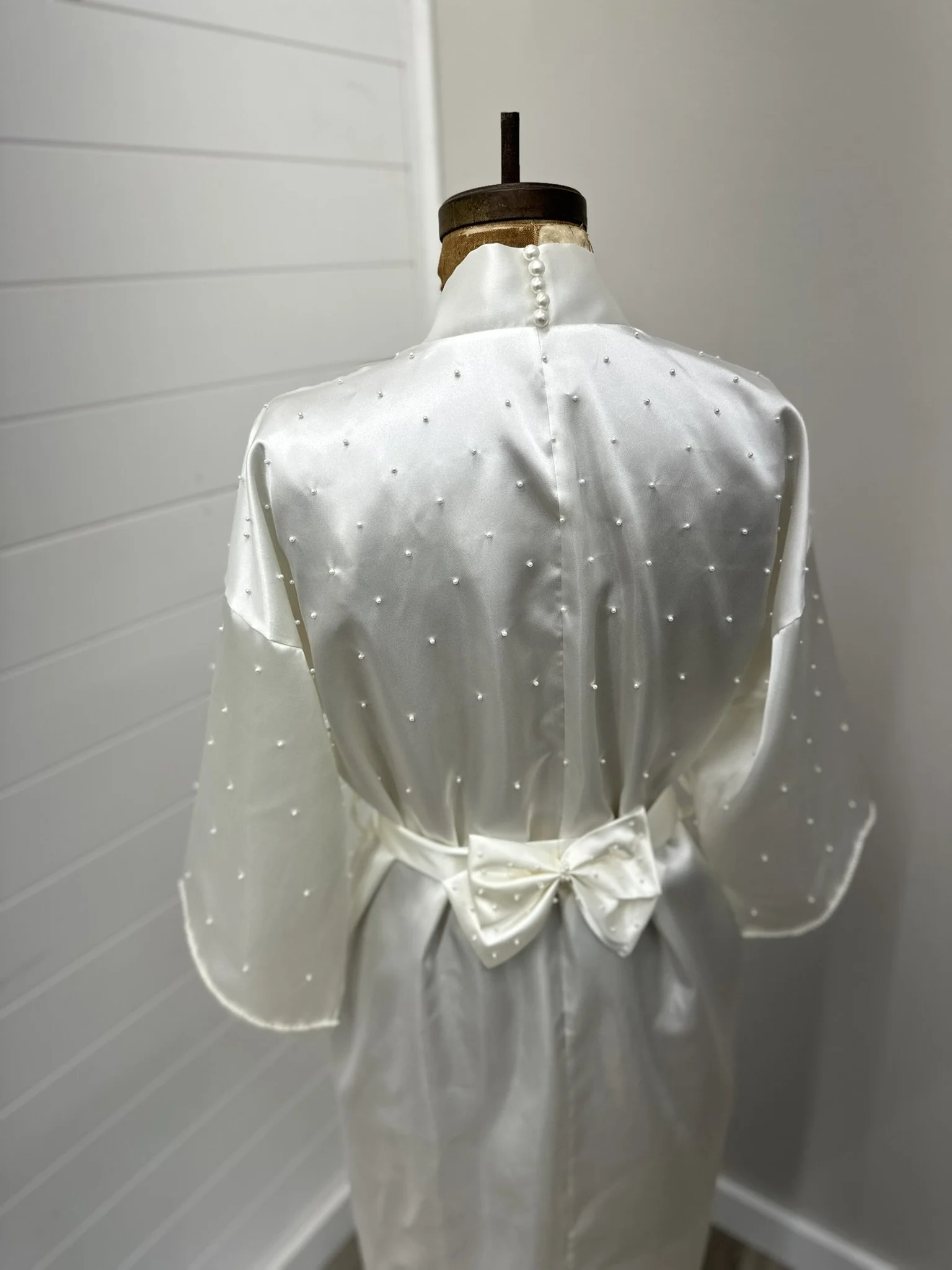
A mom brought in her fairly simple satin gown to turn into a surprise robe for her daughter. It had pearl and lace accents on the bodice and sleeves and a beaded pearl edge that hemmed the entire dress. She shared that she and her fiancé had hand-beaded that together before the wedding, a detail that must have taken dozens of hours. Sadly, her husband had recently passed away, so I really wanted to make sure that detail became a prominent feature of the robe. I spent hours carefully hand sewing those special pearls into an ombré polka dot pattern across the bodice of the robe so that on her wedding morning, the bride would quite literally be wrapped in both her mom and her dad. I am not a cryer, but there were a lot of tears from both of us when she picked up that robe, and I am sure for the bride as well!
In your experience, how does wearing a transformed heirloom gown change how a bride feels on her wedding day?
I love this question! Incorporating these legacy, heirloom pieces really sets the tone for the day. Whether she’s wearing mom’s dress the night before as she welcomes guests, or wrapping herself in a robe made from it while getting ready to marry the love of her life, it has a grounding effect. It recenters the day. It shifts the focus back to the relationships that brought her here and the marriage she’s about to begin. It reminds her that this isn’t just a wedding, it’s both a continuation and start of a story. And I think that changes everything.
Creating Pieces & Working With Brides
When should a bride reach out if she’s considering a gown transformation or preservation service?
The earlier, the better!
For transformations, our project calendar often books up six months in advance, and heirloom gowns usually need time for restoration, design planning, careful reconstruction, and fittings if they’re being altered to wear again. Reaching out early ensures we have the time and bandwidth to fully bring your vision to life.
What advice would you give to brides who love the idea of wearing a family gown but feel unsure if it’s “them”?
You’re allowed to love the sentimentality and still want to feel like yourself. Wearing a family gown doesn’t mean you have to recreate it exactly as it was. It can be redesigned, partially incorporated, or transformed into something entirely new. The goal isn’t obligation, it’s connection. I always tell brides that you should still go dress shopping, explore your options, and have your own “yes to the dress” moment if you find the right one. If that moment comes in a modern redesign of mom’s gown, beautiful. If it comes in a brand-new dress and we incorporate heirloom elements in a different way, that’s beautiful too. There’s no one right way to honor a legacy.
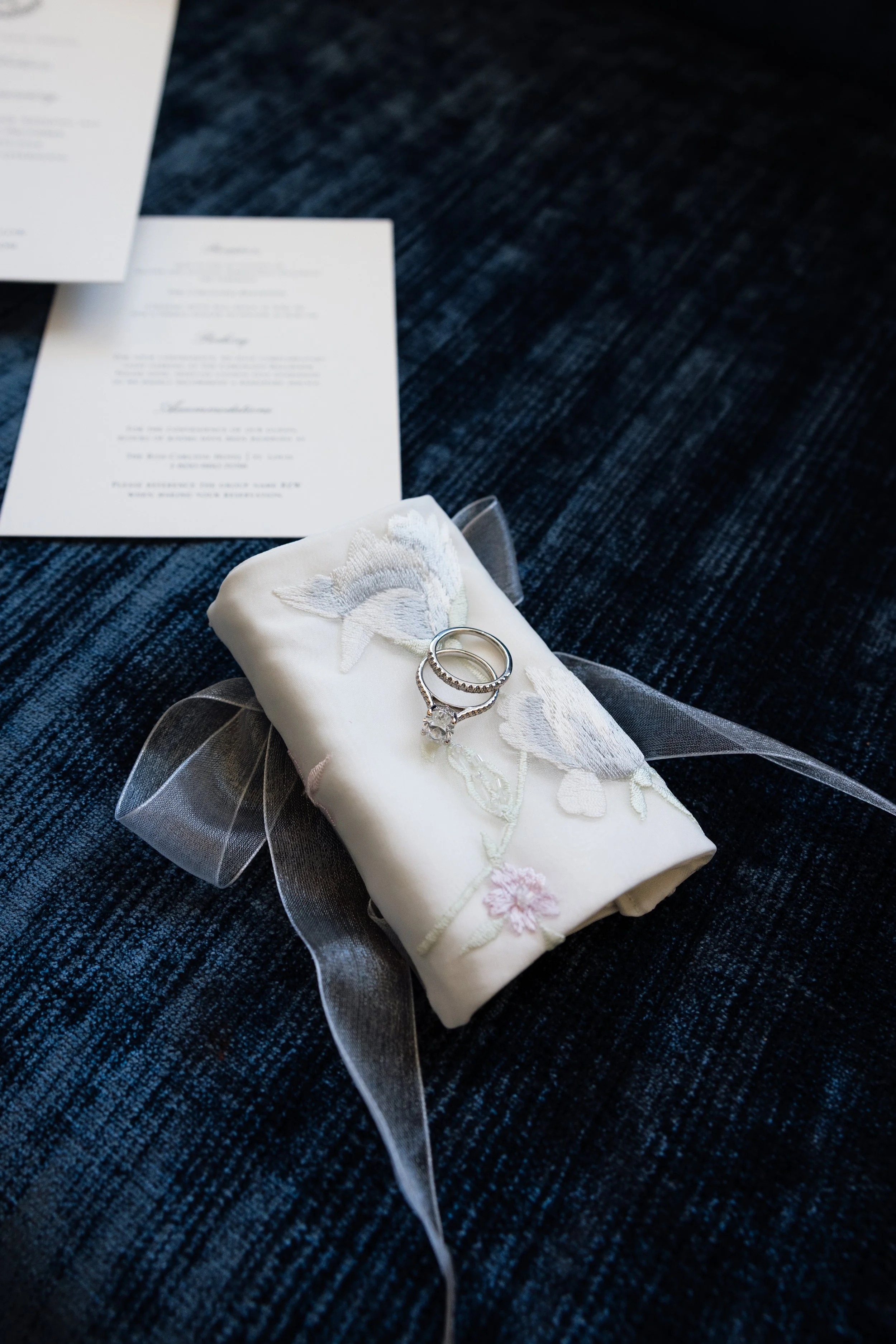
Sometimes exploring smaller sentimental elements can help bridge that gap. An adjustable bouquet wrap, a ring bearer pillow, clutch, or subtle lace accents from a family gown can be a meaningful nod to your history without defining your entire bridal look.
Care, Craft, & Expertise
Are there certain fabrics or materials that require extra care or expertise?
Silk is often the most finicky. It’s incredibly beautiful, but also the most sensitive to improper cleaning and preservation. It walks a very fine line, you want to thoroughly remove dirt and staining while still preserving the integrity of the fibers. Decades later, when we’re working with silk for an heirloom redesign, it can also be more fragile depending on how it was stored. Certain stain situations also require a lot of expertise, regardless of the fabric. Ballgown bustles are a perfect example. They’re one of my favorite bustle styles because they are visually clean and structurally strong, but they flip the train up underneath the gown, which creates a concentrated dirt line straight across the center of the skirt. Those stains are layered – dirt, tar, drinks, city grime, often requiring multiple rounds of specialty treatments to lift each component. Our viral “Chicago dress,” where the bride danced through the streets with a ballgown bustle, took seventeen rounds of treatments before it was ready for preservation!
What sets professional gown preservation apart from at-home or DIY methods?
What sets Missouri Gown Preservation apart is the level of oversight and specialization. Your gown stays local in Missouri and is handled by professionals who each stay in their lane of expertise. The process begins with a preservation consultation performed by a bridal alterations specialist, where we assess its condition, identify stains, and complete any necessary repairs. It’s then professionally cleaned by our fourth-generation dry cleaning partner using preservation-safe, pH-neutral solutions before returning to us for final inspection and preservation in cardboard-free, museum-quality archival materials.
Bridal Advice From A Vendor
What is one thing you wish every bride knew about their wedding dress - before and after the wedding day?
Pick the dress because you love it. Don’t worry about whether it’s timeless or if your future daughter will approve of it one day. Your wedding is a snapshot in time of who you are right now. Embrace that. Don’t let the future determine your choice. And on the wedding day, don’t get fussy about keeping it spotless. Attempting to remove stains in the moment can actually make them worse and throw off your timeline. Photographers have this magical tool called Photoshop to take care of that. Have the best day of your life. Smash the cake, spray the champagne, run through the grass, mop up the dance floor, spill the drinks, eat the tacos. If it ends up on the dress, bring her to us and we’ll clean her up and tuck her away the right way.
Our Story (Hailey + Zoe)!
A Full-Circle Wedding Day with Rachel
We originally connected because I was providing on-site gown delivery and steaming through Missouri Gown Preservation for Rachel’s wedding day. We steamed Rachel’s gown and her bridesmaids’ dresses to make sure everything was flawless and photo-ready before the day began. Alterations by Debbie also handled both the bride’s and mother of the bride’s alterations, so we were already woven into the foundation of the day. What made Rachel’s wedding especially meaningful, though, was the work we had done beforehand.
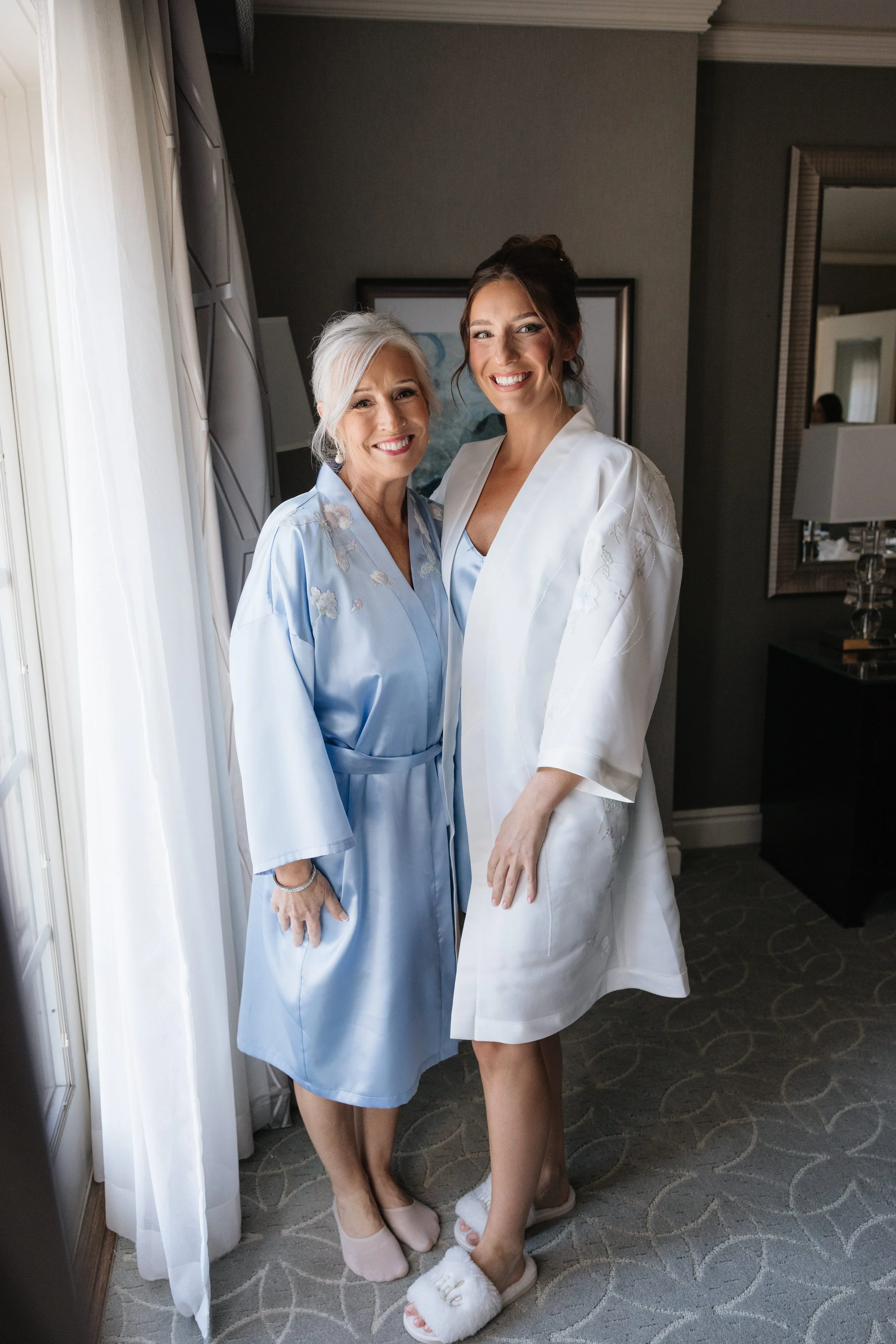
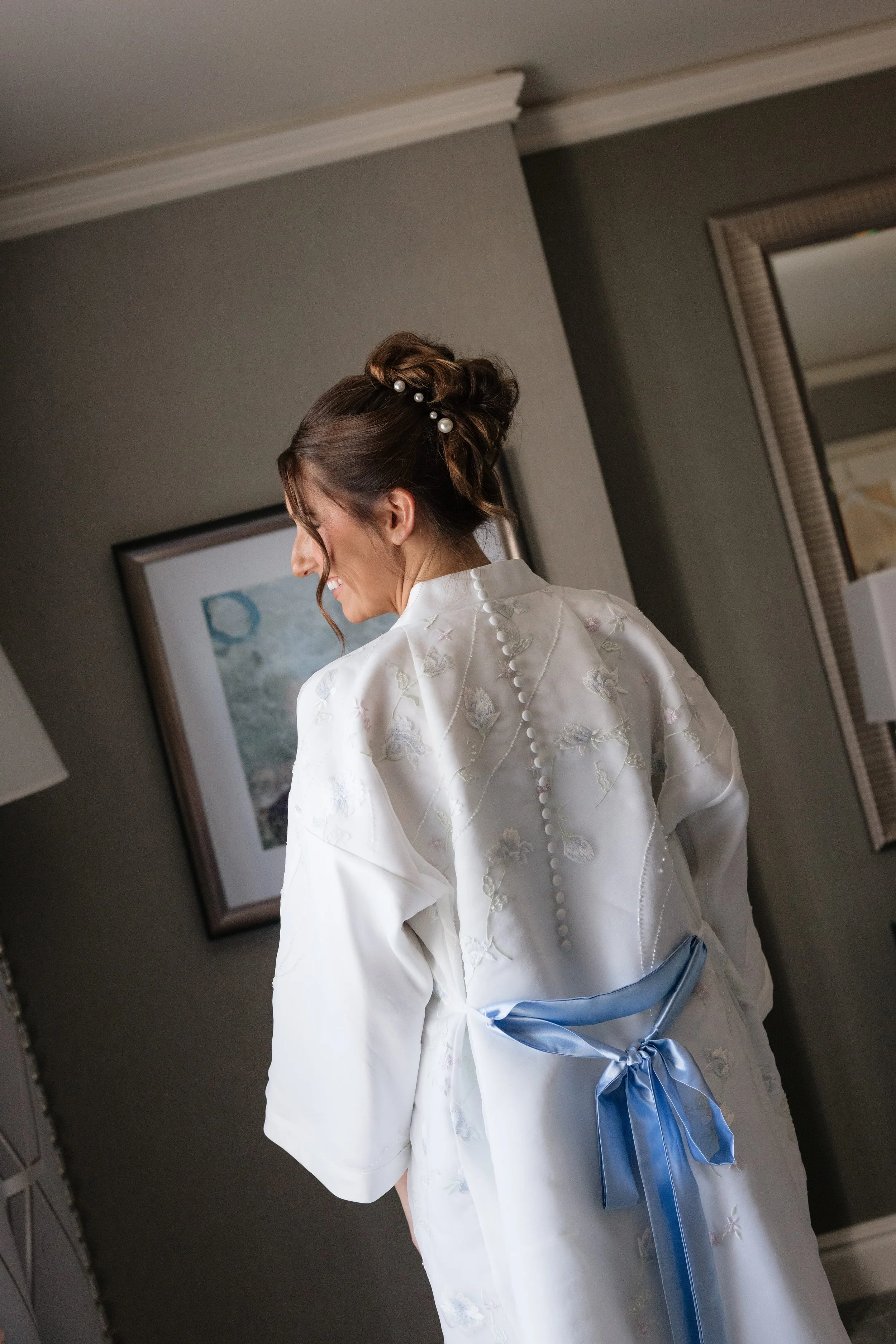
Rachel’s mom, Deniser, brought in her 2002 wedding gown, that she loved so much “I know everybody loves their dress, but I loved my dress”. It was colorful! It had beautiful pink, blue, and green flowers embroidered throughout, something we don’t see very often. For Rachel, we transformed it into a bridal robe made entirely from her mom’s original dress. We also created a matching “mama robe” with a soft blue base and floral appliqué from the gown, along with coordinating blue camisole slip dresses for both of them. They wore these pieces together on the wedding morning while getting ready, and it set the sweetest, most sentimental tone for the entire day.
We also created an envelope clutch for mom so she could carry a piece of her dress with her, perfectly sized for her phone, tissues, and a little makeup touch-up kit. For Rachel, we designed an adjustable bouquet wrap from the gown, and I stayed to apply it with the florist so she could carry her mom’s dress down the aisle in a subtle but deeply meaningful way. Being able to serve from every facet – alterations, heirloom redesign, on-site steaming, and preservation – allowed us to support their family in a truly full-circle way. It’s one of my favorite examples of how a gown doesn’t just get worn once… it becomes part of the entire wedding story and the next one to still unfold!